read receipts
Netflix Trained You to Click the 'Someone's Using Your Account' Email. Scammers Noticed.
The security alert that doubles as an upsell is the best gift streaming services ever gave phishers.
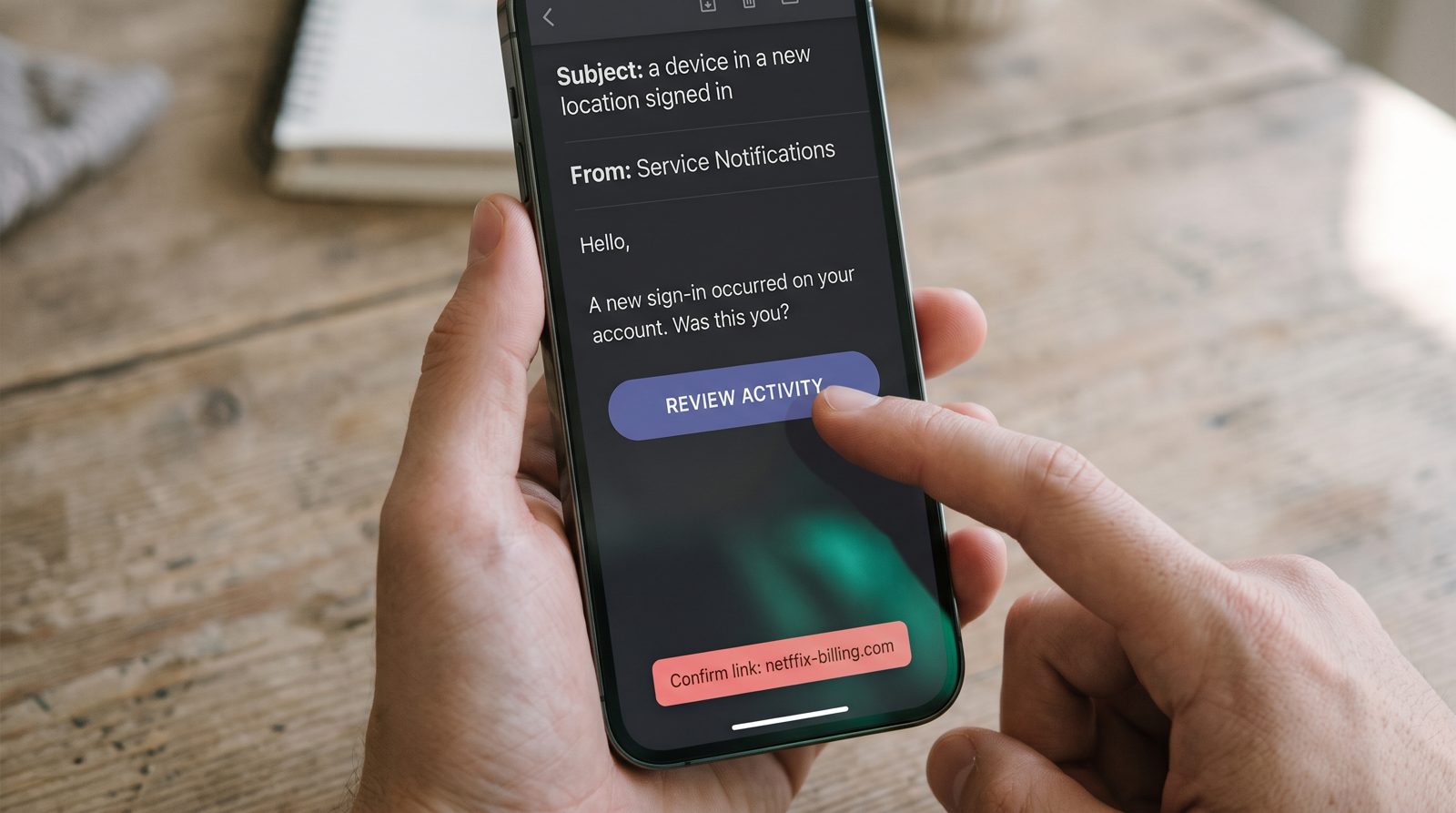
The email that says "a device in a new location signed in to your account" is doing two jobs at once, and only one of them is about security. When Netflix ended free household sharing, it pushed account subscribers toward a paid "extra member" add-on that in the US runs about $8 a month on top of the plan — and the nudge that gets people there looks almost exactly like the phishing bait sitting in your spam folder. That resemblance isn't an accident. It's the whole problem.
Why does the real Netflix email look like a scam?
Because it's built to trigger the same reflex a scam is: urgency about your account, plus one obvious button. Netflix's May 2023 US rollout of paid sharing leaned on messaging about devices "not part of your household," asking users to verify, transfer a profile, or pay to add a member. All legitimate. All also indistinguishable in shape from the "unusual sign-in, confirm now" template phishers have used for years.
The company reported the crackdown worked as a growth engine — it added roughly 5.9 million subscribers in the quarter the US paid-sharing push landed, a number that beat Wall Street expectations and reframed the whole industry's view of sharing as leakage to be monetized. So the alert isn't neutral plumbing. It's a retention and upsell mechanic wearing a lanyard that says SECURITY. Spotify, Disney+, and others have run variations of the same play.
How does a fake one slip past you?
It copies an email you've already been taught to obey. Once a real platform conditions you to expect account-security messages with a big friendly button, your guard drops for the fake ones. The US Federal Trade Commission has flagged exactly this pattern in its consumer alerts: messages posing as streaming or subscription services claiming a payment failed or a login looked suspicious, steering you to a lookalike page that harvests your password and card.
The tell is almost never in the design, which is why eyeballing "does it look real" fails. It's in the headers. A genuine Netflix message passes SPF and DKIM for a netflix.com domain and aligns with DMARC; a spoof usually fails alignment or arrives from a cousin domain like netffix-billing.com. Your reflex can't read SPF. Software can — a good AI inbox that flags phishing checks authentication before you ever see the subject line. Also: hover the button. Real streaming links go to the brand's own domain, not a shortener or a string of random characters.
What should you actually do when one lands?
Never click the button in the email — go to the app or type the address yourself. This is the one habit that defeats the entire category, because every version of this scam depends on you using their link instead of your own. If your account really was accessed, you'll see it in your settings under recent sign-ins, and you can reset the password and sign out all devices from there.
Treat payment-failure messages the same way. The FTC's guidance is blunt: companies you do business with won't email you a link demanding your card details to avoid losing service. If Netflix wants your money, it'll tell you inside the app you already pay through. The uncomfortable part is that the platforms made this harder on purpose. By dressing marketing as a warning, they spent years teaching a billion people that an urgent account email deserves a click. Scammers are just collecting on the lesson.
Sources
- Netflix Q2 2023 shareholder letter — paid-sharing rollout and subscriber additions
- FTC Consumer Alerts — phishing posing as subscription/account-security messages
- Netflix Help: extra member and sharing — paid extra-member add-on and household verification