read receipts
The Gift Card Email From Your Boss Has No Malware in It — That's the Point
It doesn't break into your inbox. It walks in through the org chart and asks you nicely.
The most profitable email scam running right now ships with zero attachments, zero spoofed domains, and zero exploit code. It's the "quick favor" message that looks like it's from your CEO, asking you to buy gift cards and send the codes "discreetly." The FBI logged business email compromise losses of $2.9 billion in its 2023 Internet Crime Report. Gift cards are the payout of choice because they're the cash that can't be clawed back.
Why does a gift card email beat an actual hack?
Because it attacks the one system no security team patches: the instinct to help your boss fast. There's nothing for a spam filter to catch. The message is often plain text, sent from a free webmail account with a display name set to your executive's name — no server was compromised, no password stolen, no domain forged. SPF, DKIM and DMARC all pass, because the email genuinely came from where it says it came from: some throwaway Gmail account the attacker controls. Those protocols verify that the sending server is authorized for its domain. They have no opinion on whether the human reading it should obey. The con runs on hierarchy and urgency, two things that don't trip any technical alarm. You're not being outsmarted. You're being managed.
What does the actual message look like?
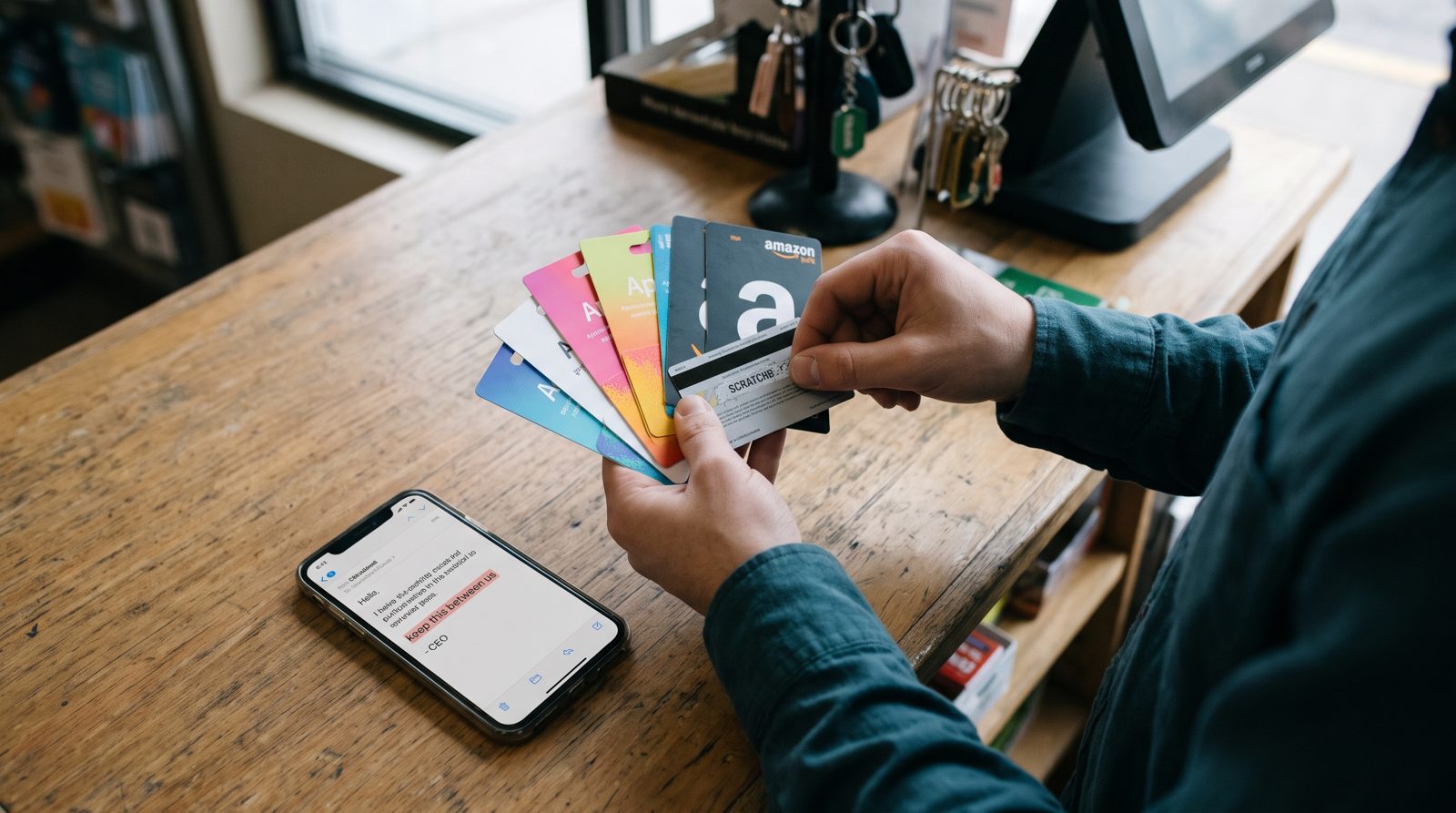
Short, urgent, and allergic to the phone. The classic opener is "Are you at your desk?" or "I need a quick favor, I'm in a meeting." Then comes the ask: buy several gift cards — Apple, Google Play, Amazon, often a few hundred dollars each — scratch off the backs, and send photos of the codes. The FTC found that gift cards were the most-reported payment method for fraud for years running, and that scammers overwhelmingly steer victims toward them precisely because the funds are gone the instant the code is read. The two tells that matter aren't technical. One: the request to move off your normal channel and keep it "between us." Two: a reason you can't just call to confirm. Legitimate urgent requests survive a phone call. This one dies on contact.
How do you kill it without a security team?
Verify out of band, every time, and make it policy out loud. If the email says call me later, call now — use the number already in your contacts, not one in the message. Treat "keep this discreet" as the signal it is: real executives do not route company purchases through your personal errands and a photo of a scratched-off code. Finance teams should set a hard rule that no gift card purchase or wire change ever happens on an email request alone. On the inbox side, an AI assistant that reads the message can flag the pattern humans miss under pressure — a first-contact sender with an executive display name, an urgent off-channel ask, no prior thread. That's exactly the kind of social cue an AI email advisor is built to surface before you reach for your wallet. The scam only works at the speed of panic. Slow it down and it falls apart.
Sources
- FBI IC3 2023 Internet Crime Report — business email compromise loss figures
- FTC Consumer Protection Data Spotlight: Gift Cards — gift cards as top reported fraud payment method