read receipts
A Fake 'PayPal Support' Email Can Pass Every Security Check You've Been Told to Trust
SPF, DKIM and DMARC guard the one part of an email you never see — and leave the name you actually read wide open.
Yes, a spoofed email can sail through DMARC while the From line reads "PayPal Support" or "Chase Fraud Department." The three-letter protocols everyone cites as proof an email is real — SPF, DKIM, DMARC — only verify the sending domain and the cryptographic signature. The display name, the human-readable bit your eye lands on first, is never checked. The trust badge protects the field nobody looks at.
Can a spoofed email really pass DMARC with a fake display name?
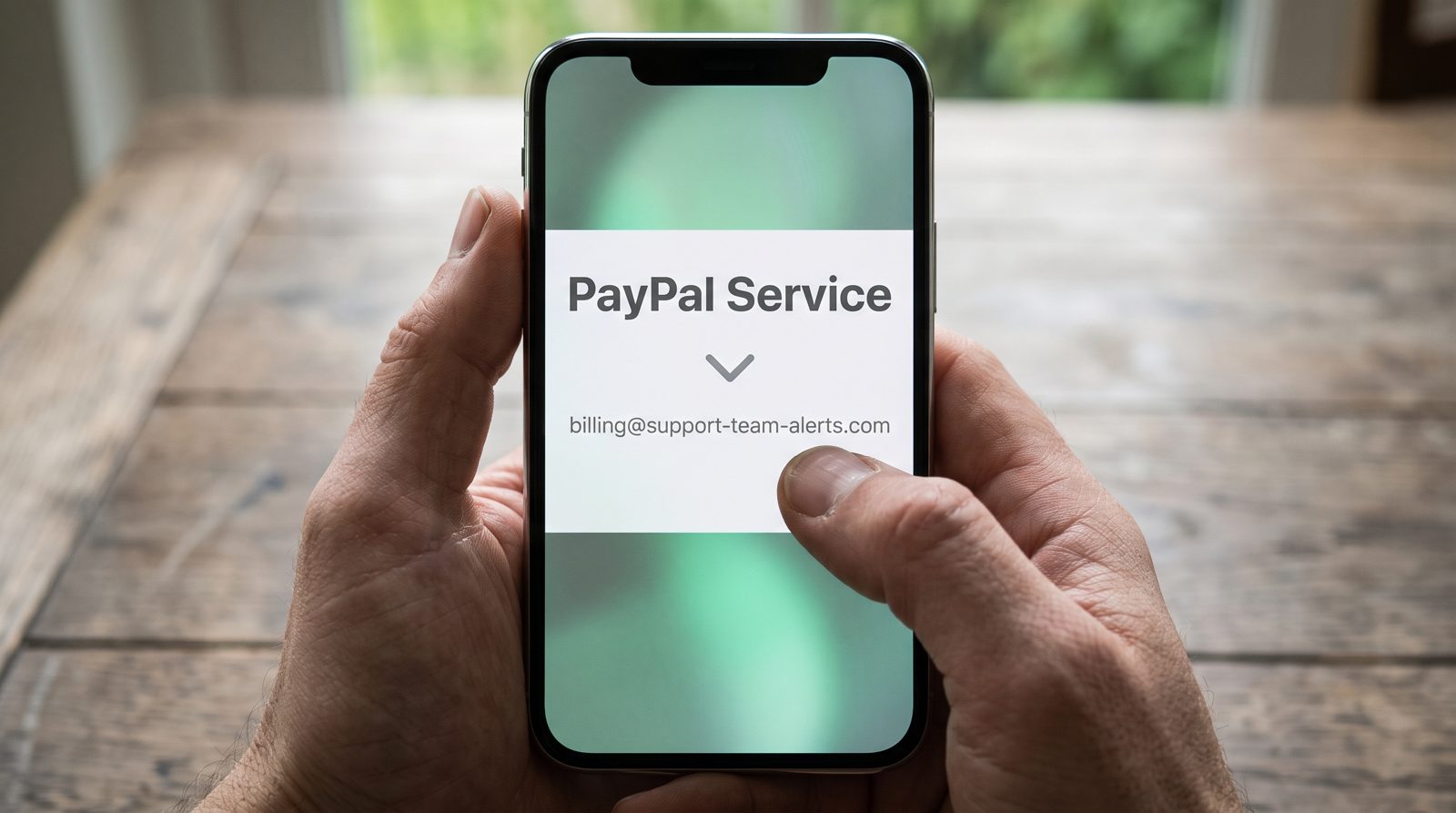
It can, and the reason is baked into the standard. RFC 7489, the DMARC specification, is explicit that it only concerns the domain in the "RFC5322.From" header — the part after the @ sign. It says nothing about the display name, the free-text label that comes before the address. So an attacker who controls an ordinary domain like support-team-alerts.com, sets up correct SPF and DKIM records, and sends from billing@support-team-alerts.com will get a clean DMARC pass. They just set the display name to "PayPal Service." Technically flawless authentication. Completely dishonest presentation.
Most mail clients then make it worse. Phones in particular show the friendly name and hide the address entirely until you tap it. You see "PayPal Service"; the actual support-team-alerts.com sits behind a chevron you'll never press.
What is DMARC actually checking, then?
DMARC checks that the domain in the From header lines up with a domain the sender is authorised to use — and nothing beyond that. SPF confirms the sending server's IP is on the domain's approved list. DKIM adds a cryptographic signature tied to a domain. DMARC's job is "alignment": it makes sure the domain SPF or DKIM validated matches the visible From domain, so you can't pass authentication on evil.com while claiming to be paypal.com.
That is genuinely useful. It's why outright domain impersonation of big brands has gotten harder, and why Google and Yahoo began requiring DMARC for bulk senders in February 2024. But M3AAWG, the industry group that writes sender-authentication guidance, is clear that these protocols authenticate the domain, not the intent or the wording. The envelope can be real while the message is a lie.
Why does the display name get a free pass?
Because email was built before anyone imagined it would move money, and the display name was designed to be friendly, not verified. It's a courtesy label. There's no registry of who may call themselves "Apple Billing," no check against trademark, nothing. You can set yours to the Pope. Mail standards treat it as decoration, so authentication steps right over it.
This is also how a growing category of scam works: display-name spoofing paired with a legit-looking lookalike domain. The FBI's Internet Crime Complaint Center logged over $2.9 billion in business email compromise losses in 2023 — and BEC leans heavily on exactly this trick, a trusted-looking name over an address the target never scrutinises. The protocols all passed. The money still left.
How do you actually read the From line now?
Stop reading the name and read the address. On desktop, hover or click to expand the full user@domain and ask one question: is this the domain the real company uses, letter for letter? PayPal sends from paypal.com, not paypal-secure.net or service-paypal.com. On mobile, tap the sender to reveal the address before you tap anything else.
Then a second check: would this organisation address you by a generic greeting and push you toward a login link over a demand you didn't expect? That's the part no header verifies. This is also where AI filtering earns its keep — tools like xmail's scam flagging compare the display name against the authenticated domain and surface the mismatch, instead of trusting the friendly label the way your eye does. A DMARC pass tells you the domain is who it says. It never told you the name was.
Sources
- RFC 7489 (DMARC) — IETF specification; defines what DMARC authenticates
- M3AAWG Sender Authentication guidance — industry guidance on SPF/DKIM/DMARC scope
- FBI IC3 2023 Internet Crime Report — $2.9B in BEC losses
- Google bulk sender requirements — DMARC required for bulk senders from Feb 2024